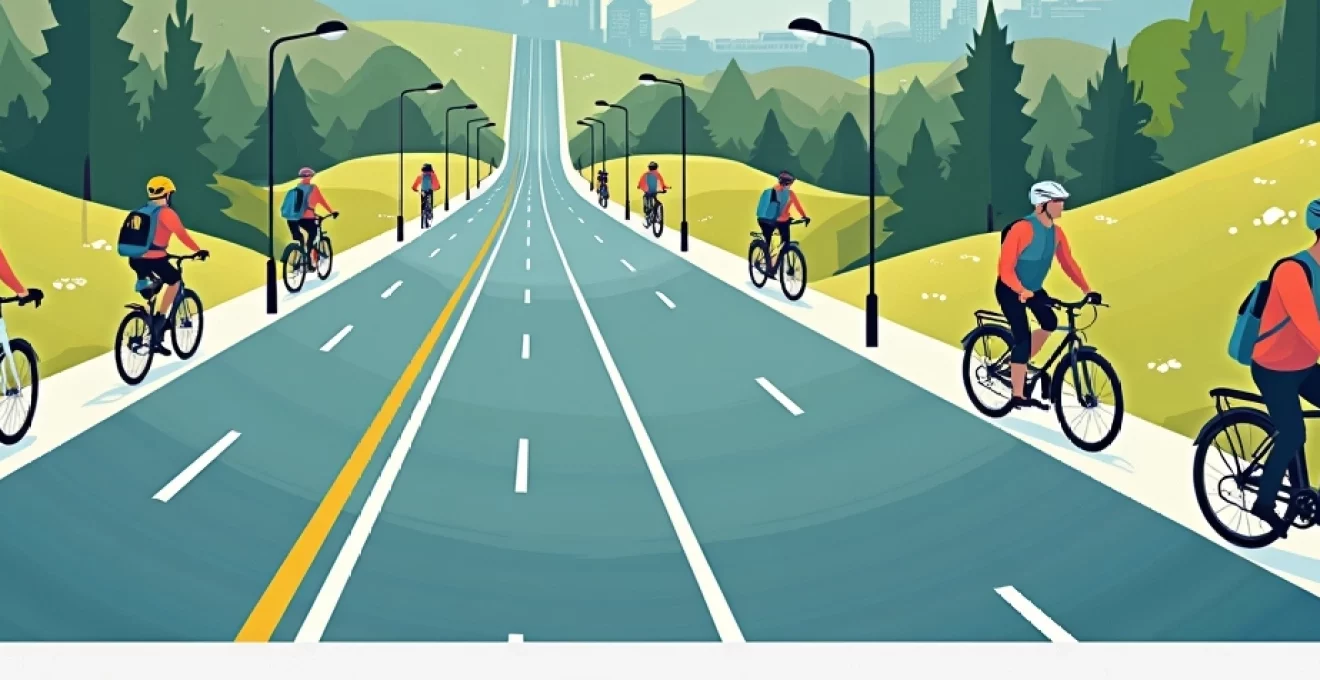
The humble bicycle has evolved from a simple mode of transport to a powerful catalyst for sustainable urban mobility and eco-conscious travel. As cities grapple with congestion and pollution, and travellers seek more immersive experiences, bicycles offer a solution that marries efficiency with environmental responsibility. This shift towards two-wheeled exploration is reshaping urban landscapes, transforming tourism, and prompting a reevaluation of how we interact with our surroundings.
Evolution of bicycle technology for sustainable urban mobility
The modern bicycle is a far cry from its 19th-century predecessors. Today’s urban bikes are marvels of engineering, designed to tackle the challenges of city living while promoting sustainability. Lightweight materials such as carbon fibre and aluminium alloys have made bicycles more efficient and easier to manoeuvre through crowded streets. Innovative gearing systems allow riders to effortlessly navigate varied terrain, from flat city centres to hilly suburbs.
One of the most significant advancements in bicycle technology has been the rise of electric bikes , or e-bikes. These power-assisted cycles have revolutionised urban commuting, making longer distances and challenging topography accessible to a broader range of riders. With battery technology improving rapidly, e-bikes now offer extended ranges and shorter charging times, further enhancing their practicality for daily use.
Smart technology integration has also played a crucial role in the evolution of bicycles. GPS-enabled bike computers, smartphone apps for route planning, and connected bike-sharing systems have made cycling more convenient and user-friendly. These technological advancements not only improve the cycling experience but also contribute to the overall efficiency of urban transportation networks.
Carbon footprint analysis: bicycles vs. motorised transport
The environmental benefits of cycling over motorised transport are well-documented, but a detailed carbon footprint analysis reveals the true extent of these advantages. By examining the entire lifecycle of bicycles and comparing them to cars and public transport, we can gain a comprehensive understanding of their environmental impact.
Life cycle assessment (LCA) of bicycle manufacturing
The production of bicycles does have an environmental cost, primarily due to the materials used and manufacturing processes. However, this impact is significantly lower than that of motorised vehicles. A typical bicycle produces approximately 5g of CO2 per kilometre travelled, taking into account its production, maintenance, and disposal. This figure is remarkably low compared to other forms of transport.
The use of recycled materials in bicycle manufacturing has further reduced the carbon footprint. Many manufacturers now incorporate recycled aluminium and steel into their frames, reducing the energy required for production and minimising waste. Additionally, the longevity of modern bicycles means that their environmental impact is spread over many years of use.
Comparative emissions: bicycles, e-bikes, and fossil fuel vehicles
When comparing emissions, the contrast between bicycles and fossil fuel vehicles is stark. While a standard bicycle produces no direct emissions during use, a typical petrol car emits around 120g of CO2 per passenger kilometre. Even when accounting for the rider’s increased respiration, cycling remains far more environmentally friendly.
E-bikes occupy a middle ground in this comparison. While they do require electricity to charge, their emissions are still substantially lower than those of cars. On average, an e-bike produces about 22g of CO2 per kilometre travelled, factoring in battery production and charging. This makes them an excellent compromise for those seeking an eco-friendly alternative with added power assistance.
Urban air quality improvements through cycling infrastructure
The shift towards cycling has tangible benefits for urban air quality. Cities that have invested in comprehensive cycling infrastructure have seen notable improvements in air quality indicators. For instance, Copenhagen’s extensive network of cycle lanes has contributed to a reduction in nitrogen dioxide levels by up to 10% in certain areas.
These improvements are not just environmental but also have significant public health implications. Reduced air pollution leads to lower incidences of respiratory diseases and cardiovascular issues among urban populations. As more cities adopt cycling-friendly policies, the cumulative effect on air quality could be substantial.
Carbon offset potential of bicycle commuting in major cities
The potential for carbon offsetting through increased bicycle commuting is enormous. In major cities, where a significant portion of emissions comes from transport, a shift to cycling could lead to substantial reductions in carbon output. Studies suggest that if 10% of urban commuters switched from cars to bicycles, it could result in a reduction of up to 7.5 million tonnes of CO2 emissions annually in a city the size of London.
This carbon offset potential is not just theoretical. Cities that have actively promoted cycling have seen real-world reductions in their carbon footprints. Amsterdam, for example, where cycling accounts for 38% of all trips, has one of the lowest per capita carbon emissions in Europe.
Slow travel renaissance: bicycle touring and cultural immersion
The concept of slow travel, emphasising deeper connections with local cultures and environments, has found a perfect companion in bicycle touring. This form of travel allows for a more intimate exploration of landscapes and communities, fostering a greater appreciation for the journey itself rather than just the destination.
Eurovelo network: connecting europe’s diverse landscapes
The EuroVelo network stands as a testament to the growing popularity of long-distance cycle touring. This ambitious project aims to create a network of 17 long-distance cycle routes connecting and unifying the entire European continent. Spanning over 90,000 kilometres, EuroVelo routes traverse diverse landscapes, from the rugged coastlines of the Atlantic to the sun-drenched shores of the Mediterranean.
These routes not only provide cyclists with safe and scenic paths but also contribute to local economies along the way. Small towns and rural areas that were once bypassed by traditional tourism routes now find themselves at the heart of a new form of sustainable travel. The EuroVelo network has become a model for how bicycle infrastructure can be integrated on a continental scale, promoting both tourism and cross-cultural understanding.
Bikepacking gear innovations for Long-Distance cycling
The rise of bikepacking has spurred a wave of innovation in cycling gear. Ultralight, waterproof bags that attach directly to the bike frame have replaced traditional panniers, allowing for more efficient and aerodynamic travel. Compact camping equipment designed specifically for cyclists has made it easier to embark on multi-day adventures without sacrificing comfort.
These gear innovations have not only made long-distance cycling more accessible but have also reduced the overall environmental impact of cycle touring. Lightweight, durable equipment means less material use and longer product lifespans, aligning with the principles of sustainable consumption.
Cycle tourism’s economic impact on rural communities
Cycle tourism has emerged as a significant economic driver for rural communities. Unlike traditional forms of tourism that often concentrate economic benefits in urban centres or resort areas, cycle tourism disperses economic activity along routes and trails. This can provide a vital source of income for small businesses in rural areas, from bed and breakfasts to local cafes and bike repair shops.
A study by the European Cyclists’ Federation found that cycle tourists spend on average €57 per day, compared to €48 for other types of tourists. This higher spending, combined with the tendency for cyclists to travel through areas off the beaten path, can significantly boost local economies. In some regions, cycle tourism has become a cornerstone of rural development strategies, providing a sustainable alternative to more intensive forms of tourism.
Urban planning and cycling infrastructure development
The integration of cycling into urban planning has become a key focus for cities aiming to improve sustainability and liveability. This shift requires a comprehensive approach, encompassing everything from dedicated cycle lanes to bicycle-friendly policies and urban design.
Copenhagen’s cycle superhighways: A model for metropolitan areas
Copenhagen’s cycle superhighways represent the gold standard in urban cycling infrastructure. These wide, well-maintained paths connect the city centre with outlying suburbs, providing safe and efficient routes for commuters. The superhighways feature green wave technology , which synchronises traffic lights to the average cycling speed, allowing for uninterrupted journeys.
The success of Copenhagen’s model has inspired cities worldwide to invest in similar infrastructure. These superhighways not only encourage more people to cycle but also demonstrate how cycling can be integrated into the fabric of urban life, even in large metropolitan areas.
Integration of Bike-Sharing systems with public transit networks
Bike-sharing systems have become an integral part of urban mobility solutions. When seamlessly integrated with public transit networks, they offer a flexible and efficient last-mile solution. Many cities now incorporate bike-sharing stations at major transit hubs, allowing commuters to easily switch between modes of transport.
These integrated systems not only enhance the efficiency of public transport but also extend its reach. By providing an easy way to cover short distances at either end of a journey, bike-sharing encourages more people to use public transport, reducing overall congestion and emissions in urban areas.
Traffic calming measures and cyclist safety in urban environments
Ensuring cyclist safety is crucial for promoting widespread adoption of cycling in urban areas. Traffic calming measures, such as reduced speed limits, raised crossings, and chicanes, play a vital role in creating a safer environment for cyclists and pedestrians alike. These measures not only reduce the risk of accidents but also make cycling a more pleasant and attractive option for urban residents.
Some cities have taken more radical approaches, such as implementing car-free zones or giving priority to cyclists and pedestrians on certain streets. These initiatives not only improve safety but also contribute to a more liveable urban environment, with reduced noise and air pollution.
Smart city technologies for Bicycle-Friendly urban design
Smart city technologies are increasingly being leveraged to create more bicycle-friendly urban environments. IoT sensors and data analytics are being used to optimise traffic flow, adjust signal timings in real-time to prioritise cyclists, and provide valuable data for urban planners.
For example, some cities are experimenting with smart lighting systems that brighten when cyclists approach, improving visibility and safety during night-time rides. Others are using data from bike-sharing systems and cycling apps to identify popular routes and prioritise infrastructure improvements in these areas.
Health and socioeconomic benefits of Bicycle-Centric lifestyles
The shift towards bicycle-centric lifestyles brings with it a host of health and socioeconomic benefits. Regular cycling has been shown to improve cardiovascular health, reduce the risk of chronic diseases, and enhance mental well-being. The health benefits of cycling extend beyond the individual, contributing to reduced healthcare costs and increased productivity at a societal level.
From an economic perspective, cycling infrastructure has been shown to provide excellent returns on investment. Studies have found that for every euro invested in cycling infrastructure, cities can expect returns of up to €19 in health and economic benefits. This includes reduced healthcare costs, decreased absenteeism, and increased retail activity in areas with good cycling access.
Moreover, the accessibility of cycling as a mode of transport can help address issues of social equity. By providing an affordable and efficient means of transport, cycling can improve access to employment, education, and social opportunities for disadvantaged groups.
Cycling is not just a mode of transport; it’s a catalyst for creating more equitable, healthy, and liveable cities.
Future trends: E-Bikes, smart bicycles, and sustainable mobility solutions
The future of cycling looks bright, with emerging technologies set to further enhance its role in sustainable urban mobility. E-bikes are expected to continue their rapid growth, with advancements in battery technology making them even more efficient and accessible. We may see the development of solar-powered e-bikes or those that can harvest energy from braking, further reducing their environmental impact.
Smart bicycles equipped with AI and IoT capabilities are likely to become more prevalent. These could include features such as automatic gear shifting based on terrain and rider preferences, predictive maintenance alerts, and enhanced safety features like collision detection and avoidance systems.
Integration with other forms of sustainable mobility is also on the horizon. We may see the development of multimodal transport systems that seamlessly combine cycling with public transport and shared electric vehicles, all accessible through a single platform or app.
As cities continue to grapple with the challenges of urbanisation and climate change, the role of bicycles in creating sustainable, liveable urban environments is set to grow. From eco-friendly tourism to smart urban mobility solutions, the humble bicycle is proving to be a powerful tool in shaping a more sustainable future.