
First-time investors spend months agonising over pool dimensions and kitchen finishes while devoting barely a weekend to validating the one variable that determines whether their rental generates 45% or 82% occupancy: postcode. Market patterns consistently demonstrate that a basic three-bedroom property in a demand-proven coastal market will outperform a designer villa in an unvalidated destination by occupancy margins that no amount of interior styling can bridge.
The shift since 2020 has reshuffled the accessibility hierarchy. Drive-to destinations within three hours of major European cities captured demand share from fly-dependent markets, remote work extended average booking durations from 4 days to 9 days in certain coastal segments, and regulatory crackdowns in saturated urban centres redirected investor capital toward coastal communes with balanced STR ecosystems. What worked in 2019 may now trap capital in markets facing either oversaturation penalties or demand erosion. The data increasingly points toward a compressed set of location archetypes that combine sustained tourist magnetism, infrastructure resilience, and regulatory stability—criteria that require forensic research rather than holiday sentiment.
Location selection strategy: 4 coastal investment priorities
- Verify sustained demand signals: booking lead times extending 6+ months, shoulder season pricing holding 65-75% of peak rates, repeat visitor rates above 40%
- Audit accessibility infrastructure: 3-hour maximum drive from major cities, bridge or motorway access, regional airport proximity for international clientele diversification
- Map regulatory climate: commune STR registration stance, tourist tax trajectory, current density thresholds (sweet spot 15-25% accommodation mix)
- Stress-test financial assumptions against off-season reality: July-August occupancy sells itself, May and September performance determines annual yield viability
What you’ll discover in this strategic guide
- Geography dictates profitability: why your rental’s postcode eclipses its interior design
- Demand signals worth investigating: deconstructing location appeal beyond postcards
- Île de Ré decoded: what elevates this Atlantic island to landlord’s strategic asset
- Location blind spots draining occupancy before you’ve welcomed your first guest
- Your strategic questions on vacation rental location selection
Geography dictates profitability: why your rental’s postcode eclipses its interior design
Occupancy variance data tells an uncomfortable story. Well-located properties with mid-range specifications consistently achieve 75-85% annual occupancy whilst beautifully appointed villas in poorly chosen markets struggle past 55%. The differential isn’t marginal—it represents the gap between sustainable cash flow and capital erosion disguised as lifestyle investment.
Three location fundamentals drive this occupancy chasm: demand cycle depth (does the destination fill 8 months or just 8 weeks annually?), accessibility infrastructure (can your target clientele reach the property within their tolerance threshold?), and regulatory sustainability (will the commune still welcome STRs in 24 months or introduce caps that devalue your asset?). Recent platform data confirms that investors fixate on controllable variables—pool size, air conditioning, Netflix subscription—whilst underweighting the structural forces that determine whether those amenities ever get utilised. A heated pool in a village with 40% STR saturation merely subsidises guest enjoyment during your brief occupancy windows; the same pool in a balanced-demand coastal market with 18% STR density operates at commercial capacity.
The framework that follows isolates decision-relevant signals from the noise of generalised location advice. Rather than exhaustive checklists covering every conceivable criterion, this analysis prioritises the 4-5 variables that swing investment outcomes from speculative to strategic. Seasoned rental operators observe that time spent validating these fundamentals pre-purchase yields higher ROI than any post-acquisition optimisation effort.
Successful investment relies on identifying markets where hospitality standards match the expectations of discerning travelers. To understand how premium positioning can be combined with a strategic island location, exploring the luxury holiday stays offered by Travel Paradise provides valuable insight into the level of service and attention to detail expected in high-end property management. Choosing a destination with a strong reputation helps ensure that a property remains attractive throughout the year while appealing to an international clientele seeking memorable and comfortable stays.
Demand signals worth investigating: deconstructing location appeal beyond postcards
Location choice shapes not just your revenue model but the entire guest experience architecture, determining everything from booking patterns to review sentiment. The cascading impact of accommodation selection on visitor satisfaction helps reframe location decisions from aesthetic preference to strategic positioning.
Start with demand archaeology rather than personal preference. Check whether premium August inventory reserves in January or still shows May vacancy—the former signals institutional demand, the latter flags last-minute reliance that evaporates during economic softness.
Match your investment profile to optimal location archetype
-
If you prioritise capital preservation over yield maximisation and accept 4-6% net returns:
Premium coastal destinations with 40+ year tourism pedigree (Île de Ré, Bassin d’Arcachon, select Brittany peninsulas). Expect acquisition premiums but benefit from liquidity, institutional buyer depth, and demand resilience through economic cycles. -
If you target 7-10% yields and tolerate moderate volatility:
Emerging rural destinations within 90 minutes of TGV stations, showing 15-25% tourism growth over 36 months. Requires active demand validation (check tourism office data for visitor origin diversity and repeat rates) and acceptance of longer exit timelines. -
If regulatory risk doesn’t concern you and you want urban rental dynamics:
Reconsider. Paris, Lyon, Bordeaux centres now impose 90-120 day caps with €15,000 overstay penalties. Unless purchasing purely for personal use with occasional rental upside, urban France presents structural headwinds post-2024 regulatory tightening. -
If you want seasonal concentration with 20+ week vacancy acceptance:
Alpine or ski-focused markets. Extreme seasonality (December-March concentration) suits investors comfortable with lump-sum cash flow and willing to absorb 7-month vacancy drag. Often requires local management partnerships given remote location challenges.
Tourist magnetism: measuring sustained vs flash-in-the-pan appeal
Decade-long demand curves separate investment-grade destinations from Instagram-fuelled bubbles. Repeat visitor statistics from departmental tourism offices reveal loyalty: destinations where 45-60% of visitors return within 3 years transcend trend cycles.
Tourist origin composition matters as much as volume. Destinations drawing 70% domestic and 30% international visitors exhibit resilience through countercyclical cushioning. Villages reliant on 90% Parisian weekenders face vulnerability to capital city wealth shifts. Year-round event calendars signal embedded tourism infrastructure rather than seasonal beach dependence.
Île de Ré exemplifies sustained magnetism rather than manufactured appeal. The island’s tourism pedigree extends fifty years, predating the short-term rental economy entirely, with multi-generational family bookings creating baseline demand independent of platform algorithms or influencer endorsement.
Accessibility architecture: the 3-hour rule and infrastructure premium
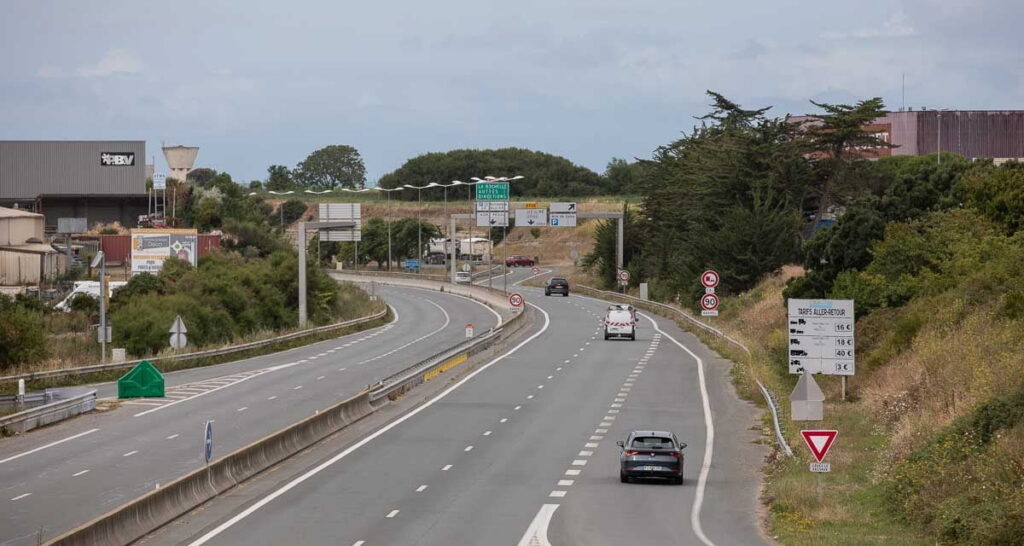
Post-2020 travel behaviour elevated drive-accessibility from convenience to prerequisite. Destinations within three hours of major cities captured disproportionate demand growth. This threshold represents maximum weekend tolerance whilst remaining acceptable for week-long stays.
Infrastructure layering amplifies this advantage. Bridge access eliminates ferry dependency and weather disruption. Regional airports diversify clientele to include international short-break visitors. TGV access within 30 minutes extends catchment to Northern European tourists. Île de Ré demonstrates optimal stacking: bridge connection via La Rochelle, airport 25 minutes away, motorway links 4h30 from Paris. Recent 2025 data from Destination Île de Ré shows furnished rental occupancy climbed 3.8% in July and 2.1% in August versus 2024, with sustained UK, Belgian, and German clientele confirming accessibility translates to booking resilience.
The corollary matters equally: fly-only destinations face structural headwinds. Regional airport route cancellations, airline capacity reductions, or fare inflation immediately impact booking velocity in ways entirely outside your control. Drive-to primacy has rewritten coastal France’s investment hierarchy since 2020.
Regulatory climate and competition density: avoiding saturation traps
Regulatory trajectory analysis prevents costly missteps. Paris, Lyon, Marseille, and Bordeaux now enforce strict STR limitations. The official 2025 Ministry guide confirms communes can reduce the standard 120-day limit to 90 days, with 15,000 € penalties. Paris, Marseille, and Arcachon activated this threshold.
Competition density requires equal scrutiny. Villages where STRs represent 40%+ of housing stock face backlash and eventual regulatory constraint. Sustainable range: 15-25% density—sufficient to support local services without triggering opposition. Research via commune open data portals or cross-reference tourism office inventories against census housing stock.
Green flags: communes investing in tourism infrastructure, established STR ecosystems with professional management, and tourism office plans signalling growth. According to economie.gouv.fr, STR declaration becomes mandatory nationwide by 20 May 2026, providing transparency to benchmark competitor density before committing capital.
Île de Ré decoded: what elevates this Atlantic island to landlord’s strategic asset
Applying the demand signal framework to Île de Ré reveals why the island commands acquisition premiums yet delivers occupancy justifying those valuations. The destination scores across all critical dimensions: fifty-year tourism pedigree, infrastructure accessibility combining bridge permanence with airport proximity, and regulatory stability rooted in commune recognition that balanced tourism sustains economic vitality.
International clientele composition provides currency diversification and recession resilience. British, Belgian, Dutch, and German visitors insulate landlords from single-market softness. July-August represent 42% of annual stays, but off-season performance matters critically: final quarter and shoulder months contribute 23% of volume. Architectural preservation regulations constrain new supply whilst maintaining aesthetic coherence premium visitors expect, functioning as supply discipline protecting incumbents from overdevelopment.
| Destination | Shoulder season pricing retention | Booking lead time (premium properties) | International clientele mix |
|---|---|---|---|
| Île de Ré | 65-75% of peak rates maintained May-September | 6-9 months advance for August availability | Strong Northern European presence (UK, Belgium, Netherlands, Germany) |
| Bassin d’Arcachon | 60-70% retention, stronger domestic than international | 4-6 months for premium waterfront | Predominantly French with emerging UK interest |
| Brittany premium (e.g., Dinard, Quiberon) | 55-65% retention, weather-sensitive shoulder months | 3-5 months, shorter booking windows than island markets | Domestic-heavy with seasonal British presence |
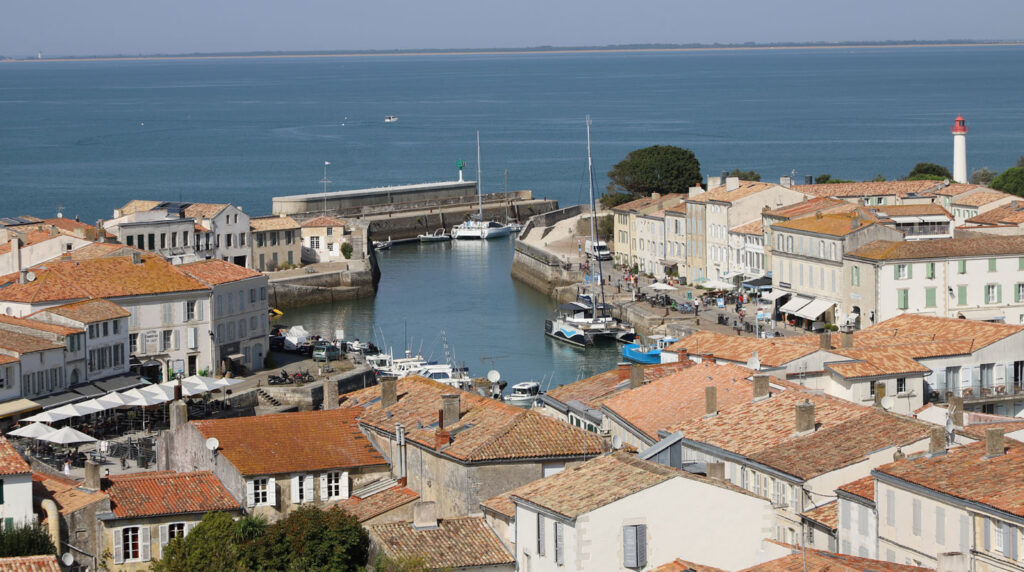
Institutional investor presence—family offices and private wealth allocators—validates Île de Ré’s status as strategic hold rather than speculative flip. These capital sources prioritise capital preservation and steady income over yield maximisation, accepting 4-6% net returns in exchange for liquidity, demand certainty, and exit optionality that emerging markets cannot match. The island attracts precisely the investor profile that sustains stable pricing through economic cycles.
Premium coastal locations increasingly capture extended-stay bookings from remote professionals seeking 2-4 week rentals, improving cash flow predictability whilst reducing turnover costs. Destinations like Île de Ré with robust infrastructure, year-round services, and quality broadband naturally attract this higher-value segment that standard seasonal markets struggle to capture.
Location blind spots draining occupancy before you’ve welcomed your first guest
Three recurring errors drain returns regardless of specification. First, conflating personal preference with investment logic: remote tranquillity photographs beautifully but books poorly—renters require restaurants and services within ten minutes. Second, ignoring shoulder season arithmetic: August sells effortlessly; investment viability depends on May-September occupancy at 60-70% of peak pricing. Third, underestimating regulatory trajectory: communes tolerating STRs today may impose post-election restrictions. Check council minutes and research whether tourism features as community asset or irritant.
Regulatory risk indicators demanding immediate investigation: Recent council debates on STR limits or tourist tax increases, resident petition activity against short-term rentals, STR density exceeding 35% in village centres, neighbouring communes implementing new restrictions (signals regional regulatory shift), absence of official tourism development strategy suggesting ad-hoc rather than planned tourism governance.
A recurring blind spot: acquiring based on projected rather than validated occupancy. Recent pension capital invested in an oversaturated Provence village achieved 60% occupancy against 85% projections, purely from underweighting competition density and overweighting aesthetic appeal. Rigorous analysis of coastal premium destinations with established international demand would have revealed occupancy patterns immune to saturation dynamics plaguing unproven inland villages.
Your strategic questions on vacation rental location selection
Can rural locations generate acceptable returns or only coastal destinations?
Rural properties within 90 minutes of TGV stations or major cities can deliver 7-9% yields if validated demand exists—check tourism office visitor growth trends over 36 months and verify activity infrastructure (vineyards, cycling routes, gastronomic anchors). Pure isolation without demand drivers yields personal satisfaction but rarely commercial occupancy.
How do I research competitor density without visiting repeatedly?
Access commune STR registration data via open data portals (data.gouv.fr for France), cross-reference accommodation counts from tourism office inventories against census housing stock to calculate density percentage, and monitor platform saturation by searching peak-week availability six months in advance—tight inventory signals healthy demand, widespread vacancy flags oversupply.
What occupancy rate threshold justifies coastal premium property acquisition?
Premium coastal markets require 70-75% annual occupancy minimum to service acquisition costs and deliver acceptable net yields post-management fees, maintenance reserves, and tourist taxes. Below 70%, either pricing strategy fails or location fundamentals don’t support premium positioning—investigate before attributing shortfall to fixable operational issues.