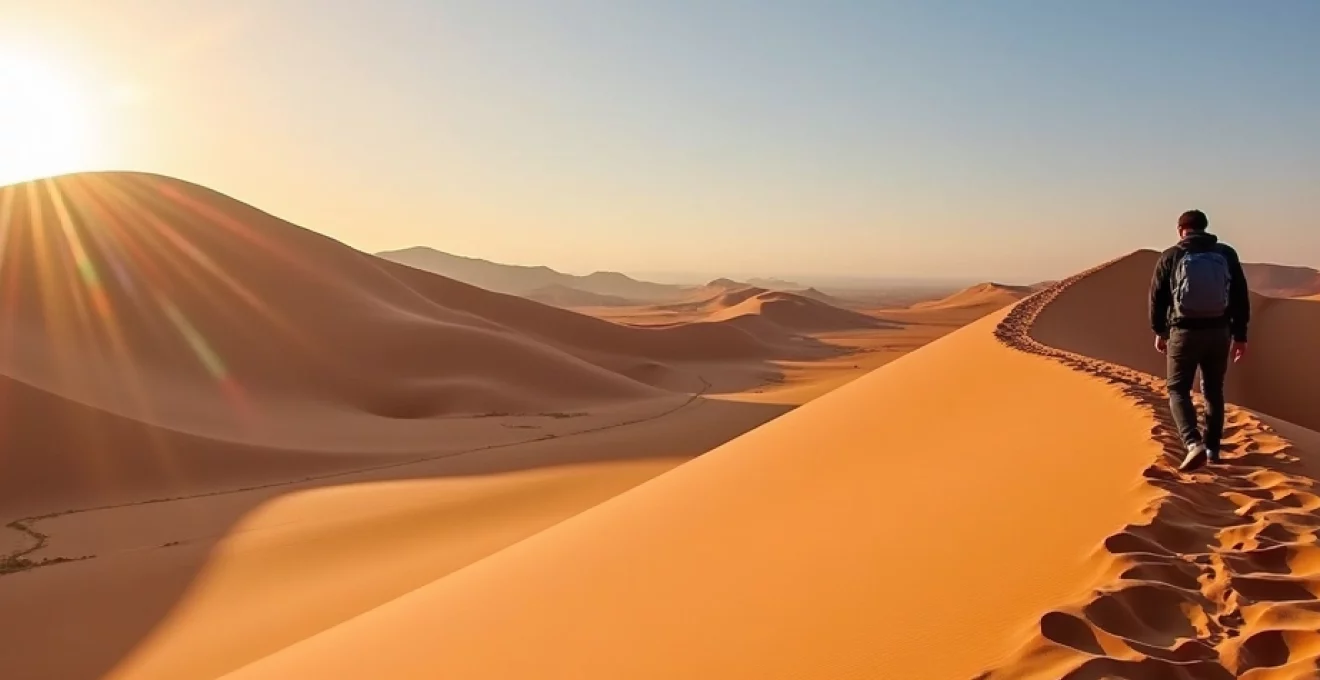
Namibia’s deserts offer a mesmerizing tapestry of natural wonders, from towering sand dunes to resilient wildlife and expansive horizons that stretch as far as the eye can see. This vast and sparsely populated country in southwestern Africa boasts some of the world’s most dramatic landscapes, making it a haven for adventurers, photographers, and nature enthusiasts alike. With its unique blend of geological marvels, diverse ecosystems, and rich cultural heritage, Namibia’s desert regions provide an unparalleled journey into the heart of untamed wilderness.
Exploring namibia’s iconic sand dunes: sossusvlei and beyond
The Namib Desert, often referred to as the world’s oldest desert, is home to some of the most iconic sand dunes on the planet. At the heart of this sandy expanse lies Sossusvlei, a salt and clay pan surrounded by towering red dunes that have become synonymous with Namibia’s landscape. These majestic dunes, sculpted by wind over millions of years, offer visitors a chance to experience the raw beauty of the desert up close.
Climbing big daddy: techniques and best times
Big Daddy, standing at an impressive height of 325 meters, is one of the tallest dunes in the Sossusvlei area. Climbing this colossal sand mountain is a must-do activity for many visitors, but it requires some preparation and technique. The best time to attempt the climb is early morning, just after sunrise, when the sand is still cool and more compact. As you ascend, follow the ridgeline to maintain your footing and conserve energy. Remember to bring plenty of water and wear sunscreen, as the desert sun can be unforgiving.
Climbing Big Daddy is like scaling a mountain of silk – challenging, but rewarding with views that will take your breath away.
Photographing dead vlei’s ancient camel thorn trees
Adjacent to Sossusvlei lies Dead Vlei, a stark white clay pan dotted with the skeletal remains of ancient camel thorn trees. This eerie, yet hauntingly beautiful landscape is a photographer’s paradise, especially during the golden hours of sunrise and sunset. The contrast between the blackened trees, white pan, red dunes, and blue sky creates a surreal scene that seems almost otherworldly. To capture the best shots, use a wide-angle lens and experiment with different perspectives, including low angles that emphasize the trees against the backdrop of the dunes.
Dune 7: conquering namibia’s tallest sand mountain
Located near the coastal town of Walvis Bay, Dune 7 holds the title of Namibia’s tallest sand dune, reaching a staggering height of 383 meters. Unlike the dunes of Sossusvlei, Dune 7 is easily accessible by car, making it a popular spot for sandboarding and photography. The climb to the top is challenging but rewarding, offering panoramic views of the surrounding desert and the Atlantic Ocean in the distance. For the adventurous, sandboarding down the steep face of Dune 7 provides an exhilarating rush that’s hard to match.
Sandwich harbour: where dunes meet the atlantic
Sandwich Harbour, located about 56 kilometers south of Walvis Bay, is a unique area where massive sand dunes cascade directly into the Atlantic Ocean. This rare geographical phenomenon creates a stunning visual contrast between the golden sands and the blue waters. Accessing Sandwich Harbour requires a 4×4 vehicle and careful timing with the tides, as the route along the beach can be treacherous. Once there, visitors can enjoy activities such as bird watching, fishing, and hiking along the dunes, all while marveling at the meeting point of desert and sea.
Wildlife encounters in namibia’s desert ecosystems
Despite the harsh conditions, Namibia’s deserts are teeming with life, hosting a variety of uniquely adapted species that have evolved to thrive in this challenging environment. From large mammals to small insects, the desert’s inhabitants offer fascinating insights into the resilience of nature.
Tracking Desert-Adapted elephants in damaraland
Damaraland, a rugged region in northwestern Namibia, is home to one of the world’s only populations of desert-adapted elephants. These remarkable creatures have evolved to survive in arid conditions, covering vast distances in search of water and food. Tracking these elephants on foot or by vehicle is an unforgettable experience that allows you to witness their incredible adaptations firsthand. Look for their wider feet, which help them traverse sandy terrain, and observe their unique foraging behaviors that minimize damage to the fragile desert vegetation.
Spotting rare black rhinos in etosha national park
Etosha National Park, while not strictly a desert environment, lies on the edge of the Namib and offers exceptional wildlife viewing opportunities. The park is one of the best places in Africa to spot the endangered black rhino. These prehistoric-looking creatures are most active during the cooler hours of early morning and late afternoon. Visit the park’s numerous waterholes, especially during the dry season, to increase your chances of seeing these elusive animals as they come to drink.
Watching a black rhino emerge from the bush to drink at a waterhole is like stepping back in time to the age of megafauna.
Observing oryx and springbok in the Namib-Naukluft
The Namib-Naukluft National Park is home to a variety of desert-adapted antelope species, including the iconic oryx (gemsbok) and springbok. These graceful animals have evolved remarkable strategies to survive in the arid environment. Oryx, with their striking black and white facial markings, can raise their body temperature to reduce water loss, while springbok can enter a state of dormancy during extreme drought. Early morning game drives or guided walks offer the best opportunities to observe these animals in their natural habitat.
Stark landscapes: namibia’s geological wonders
Namibia’s deserts are not just about sand dunes; they also boast an array of geological marvels that showcase the Earth’s raw beauty and the power of natural forces over millions of years.
Fish river canyon: africa’s largest canyon system
The Fish River Canyon, located in southern Namibia, is the second-largest canyon in the world and the largest in Africa. Stretching for 160 kilometers, with a depth of up to 550 meters and a width of 27 kilometers in places, this colossal gorge offers breathtaking views and challenging hiking opportunities. The 5-day, 85-kilometer hiking trail along the canyon floor is one of Africa’s most famous treks, but it’s only open during the cooler winter months (May to September) due to extreme summer temperatures.
Spitzkoppe: granite peaks and bushman rock art
Rising dramatically from the flat desert plains, the Spitzkoppe is a group of bald granite peaks often referred to as the “Matterhorn of Namibia.” These ancient formations, estimated to be over 700 million years old, offer a playground for hikers, rock climbers, and photographers. The area is also rich in Bushman rock art, with numerous sites featuring paintings and engravings that date back thousands of years. Exploring the Spitzkoppe at sunrise or sunset, when the granite glows golden in the soft light, is a truly magical experience.
Sesriem canyon: Water-Carved marvels in the desert
Near Sossusvlei, the Sesriem Canyon provides a stark contrast to the surrounding sand dunes. This narrow fissure, carved by the Tsauchab River over millions of years, plunges up to 30 meters deep in places. Walking through the canyon, you can observe the layers of sedimentary rock that tell the geological story of the area. The canyon’s name comes from the early Afrikaans explorers who used ses rieme (six leather straps) tied together to draw water from the pools at the bottom of the gorge.
Cultural experiences in namibia’s desert regions
Namibia’s deserts are not only natural wonders but also home to diverse cultures that have adapted to life in these harsh environments for thousands of years. Engaging with these communities offers insights into traditional ways of life and the deep connection between people and the land.
Visiting himba settlements in kaokoland
The Himba people of northwestern Namibia are one of the last semi-nomadic tribes in Africa. Known for their distinctive appearance, including red ochre-covered skin and intricate hairstyles, the Himba have maintained their traditional lifestyle in the face of modernization. Visiting a Himba settlement in Kaokoland provides an opportunity to learn about their customs, beliefs, and daily life in the desert. It’s important to approach these visits with respect and to engage with communities through responsible tourism practices that benefit local people.
Twyfelfontein’s ancient rock engravings
Twyfelfontein, a UNESCO World Heritage site in the Kunene Region, boasts one of the largest concentrations of rock engravings in Africa. These petroglyphs, created by San hunter-gatherers over 6,000 years ago, depict a variety of animals and geometric shapes. The site offers a fascinating glimpse into the spiritual and cultural life of ancient desert dwellers. Guided tours explain the significance of various engravings and the techniques used to create them.
Swakopmund: german colonial architecture meets desert
The coastal town of Swakopmund, nestled between the Namib Desert and the Atlantic Ocean, offers a unique cultural experience with its well-preserved German colonial architecture. Strolling through the town’s streets feels like stepping back in time, with buildings like the Woermannhaus and the old railway station showcasing the area’s colonial heritage. Swakopmund also serves as a base for desert adventures and offers a range of museums, galleries, and restaurants that blend European and African influences.
Stargazing and astronomy in namibia’s dark sky reserves
Namibia’s vast, unpolluted skies and low light pollution make it one of the world’s premier destinations for stargazing and astronomy. The country’s desert regions offer unparalleled opportunities to observe the night sky in all its glory.
Namibrand nature reserve: africa’s first dark sky sanctuary
The NamibRand Nature Reserve, one of the largest private nature reserves in Africa, was designated as the continent’s first International Dark Sky Reserve in 2012. This recognition highlights the exceptional quality of the reserve’s night skies and its commitment to protecting them. Visitors to NamibRand can participate in guided stargazing sessions, learn about celestial navigation, and observe phenomena such as the Magellanic Clouds, visible only from the Southern Hemisphere.
Milky way photography at sossusvlei desert lodge
For astrophotography enthusiasts, the Sossusvlei Desert Lodge offers a unique opportunity to capture stunning images of the Milky Way arching over the desert landscape. The lodge features a state-of-the-art observatory equipped with a Meade LX200R 12-inch telescope, allowing guests to observe planets, star clusters, and distant galaxies. Professional astronomers are on hand to guide visitors through the wonders of the night sky and assist with photography techniques.
Photographing the Milky Way over Namibia’s dunes is like capturing the cosmic dance between earth and sky – a truly awe-inspiring experience.
Tracking the southern cross in damaraland camp
Damaraland Camp, situated in the rugged northwest of Namibia, offers excellent stargazing opportunities away from any light pollution. Here, visitors can learn to identify the Southern Cross and other constellations of the southern sky. The camp organizes star beds , where guests can sleep out under the stars on raised platforms, immersing themselves in the celestial spectacle throughout the night. This experience provides a profound connection to the desert environment and the vast cosmos above.
Namibia’s deserts offer a treasure trove of experiences for those willing to venture into their vast expanses. From the towering dunes of Sossusvlei to the stark beauty of the Skeleton Coast, from encounters with desert-adapted wildlife to insights into ancient cultures, this land of contrasts provides endless opportunities for exploration and wonder. As you traverse these arid landscapes, you’ll gain a deeper appreciation for the resilience of life and the raw power of nature shaped over millions of years. Whether you’re climbing sand dunes, tracking elusive animals, or gazing at the star-studded sky, Namibia’s deserts promise an adventure that will leave an indelible mark on your soul.