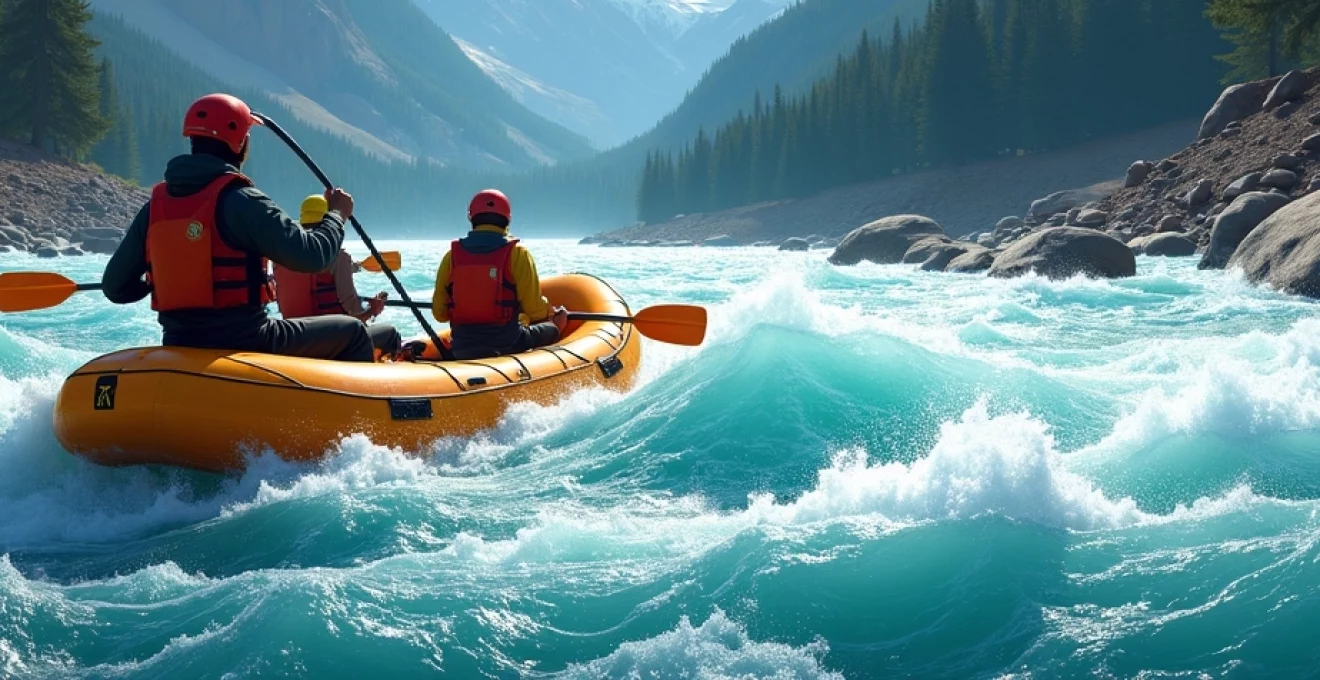
Colorado’s rugged landscape and powerful rivers create the perfect playground for adrenaline junkies seeking the ultimate whitewater rafting experience. From thundering Class V rapids to technical stretches that challenge even seasoned paddlers, the Centennial State offers some of North America’s most exhilarating river adventures. As the snowmelt surges through narrow canyons and over boulder-strewn riverbeds, rafters find themselves immersed in a world of raw power and breathtaking beauty.
For those ready to take on the challenge, Colorado’s extreme rafting scene demands respect, skill, and a deep understanding of river dynamics. Whether you’re eyeing the infamous rapids of Gore Canyon or preparing to navigate the relentless Gauntlet section of the Animas River, proper preparation and knowledge are paramount. Let’s dive into the heart-pounding world of Colorado’s most intense whitewater experiences and explore what it takes to conquer these wild waters safely.
Navigating colorado’s class IV and V rapids: A technical guide
Tackling Class IV and V rapids requires a combination of physical prowess, mental fortitude, and technical expertise. These rapids are characterised by their powerful, unpredictable currents, steep gradients, and complex obstacle courses. Navigating such challenging waters demands split-second decision-making and precise paddle control.
One of the key skills in conquering high-grade rapids is the ability to read the river . This involves quickly assessing water patterns, identifying potential hazards, and choosing the optimal line through a rapid. Experienced guides spend years honing this skill, learning to interpret subtle changes in water texture and flow that can signal underwater obstacles or dangerous hydraulics.
Another crucial aspect of high-grade rafting is mastering advanced paddle techniques. The ‘high-side’ manoeuvre, for instance, is essential for preventing flips in steep drops or powerful holes. This technique requires the entire crew to quickly shift their weight to the upstream side of the raft, counteracting the force of the water trying to capsize the boat.
Communication is vital in extreme rafting scenarios. Guides use a combination of verbal commands and hand signals to coordinate the crew’s actions. Paddlers must be able to respond instantly to these directions, working in unison to navigate complex rapid sequences.
Essential gear and safety protocols for extreme rafting
When it comes to extreme whitewater rafting, having the right gear can mean the difference between an exhilarating adventure and a potentially dangerous situation. Safety equipment for Class IV and V rapids goes beyond basic gear, incorporating specialised items designed to withstand intense impacts and provide enhanced protection.
High-performance PFDs: beyond basic buoyancy
Personal Flotation Devices (PFDs) for extreme rafting are a far cry from standard life jackets. These high-performance vests are designed to provide maximum buoyancy and protection without restricting movement. Look for PFDs with reinforced shoulder straps, multiple adjustment points for a snug fit, and additional padding to protect against impacts with rocks.
Modern high-grade PFDs often incorporate quick-release harnesses, allowing for easy attachment of safety lines or rescue equipment. Some advanced models even feature integrated hydration systems, ensuring paddlers stay hydrated during long, intense runs.
Specialised helmets for whitewater impact protection
Helmets for extreme rafting need to offer superior protection against both water and rock impacts. The best whitewater helmets feature a hard outer shell combined with energy-absorbing foam liners. Look for models with extended coverage at the back of the head and temples, areas particularly vulnerable during high-impact scenarios.
Many professional-grade helmets now incorporate drainage holes to prevent water accumulation, as well as adjustable fit systems to ensure the helmet stays securely in place even in turbulent conditions. Some advanced designs even feature integrated communication systems, allowing guides to stay in constant contact with their crew.
Advanced rescue techniques: z-drag systems and live bait rescues
In extreme rafting scenarios, standard rescue techniques may not suffice. Advanced methods like the Z-drag system are essential for extracting pinned rafts or rescuing stranded paddlers in powerful currents. This mechanical advantage system uses pulleys and ropes to create a 3:1 (or greater) force multiplication, allowing rescuers to move heavy loads against strong currents.
Live bait rescues, where a rescuer swims to a victim while tethered to a safety line, require specialised training and equipment. This technique is used in situations where boat-based rescues are impossible due to dangerous rapids or inaccessible locations. Safety considerations for live bait rescues include using quick-release harnesses and employing spotters to manage the safety line.
Raft design: Self-Bailing technology and hypalon vs PVC construction
The design and construction of rafts used in extreme conditions have evolved significantly. Self-bailing rafts, which feature a perforated floor that allows water to drain automatically, have become standard for high-grade whitewater. This design eliminates the need for manual bailing, allowing the crew to focus entirely on navigation and paddling.
When it comes to raft materials, there’s an ongoing debate between Hypalon and PVC construction. Hypalon, known for its durability and resistance to UV damage, is often preferred for commercial operations and extreme conditions. PVC, while generally less expensive, can offer comparable performance and is easier to repair in the field. The choice often comes down to specific river conditions, usage frequency, and budget considerations.
Top colorado whitewater destinations: River-Specific challenges
Colorado boasts some of the most challenging and diverse whitewater rafting destinations in the United States. Each river presents its own unique set of obstacles and thrills, demanding specific skills and strategies from rafters. Let’s explore some of the most notorious sections and the challenges they pose.
Arkansas river: navigating the royal gorge’s boat eater rapid
The Arkansas River’s Royal Gorge section is renowned for its intense rapids and stunning scenery. The infamous Boat Eater rapid, a Class IV+ monster, is the crown jewel of this run. This rapid features a series of powerful hydraulics and a narrow chute that demands precise navigation.
Tackling Boat Eater requires a combination of power and finesse. Rafters must hit the entry point with enough momentum to punch through the initial wave train, then quickly manoeuvre to avoid being sucked into the ‘Room of Doom’, a swirling eddy on river right. The key to success lies in maintaining boat angle and momentum while responding quickly to the rapid’s dynamic features.
Colorado river: tackling gore canyon’s class V kirchner’s rapid
Gore Canyon on the Colorado River is a benchmark for extreme rafting, with Kirchner’s Rapid standing out as one of its most formidable challenges. This Class V rapid begins with a steep drop into a churning hole, followed by a complex series of moves through powerful currents and large boulders.
Successfully navigating Kirchner’s requires expert-level boat control and rapid-reading skills. Guides must choose between several possible lines, each with its own risks and rewards. The ‘thread the needle’ approach involves precisely manoeuvring between two large boulders, while the ‘hero line’ takes on the rapid’s largest features head-on. Both options demand split-second timing and flawless execution.
Animas river: surviving the gauntlet section in durango
The Animas River’s Gauntlet section in Durango is a non-stop Class IV-V whitewater experience that tests the limits of even seasoned rafters. This intense stretch features a series of back-to-back rapids with little room for recovery between challenges.
Navigating the Gauntlet requires exceptional stamina and quick decision-making. Rafters must be prepared for rapid transitions between different types of water features, from large standing waves to technical rock gardens. The relentless nature of this section means that crews must maintain focus and energy levels throughout the entire run, with no opportunity to let their guard down.
Clear creek: mastering the advanced lower canyon run
Clear Creek’s Lower Canyon, just outside of Denver, offers an accessible yet challenging Class IV-V experience. The advanced section of this run is characterised by its steep gradient and continuous rapids, demanding precise manoeuvres in fast-moving water.
Success on the Lower Canyon hinges on a raft crew’s ability to work cohesively and respond quickly to guide commands. The narrow nature of the creek leaves little room for error, requiring paddlers to execute tight turns and precise strokes to navigate around obstacles. The proximity to Denver makes this an popular training ground for aspiring extreme rafters, offering a taste of high-grade whitewater in a relatively controlled environment.
Seasonal rafting: optimising trips for water levels and flow rates
Understanding the seasonal variations in water levels and flow rates is crucial for planning successful extreme rafting trips in Colorado. The state’s rivers are primarily fed by snowmelt, resulting in a dynamic rafting season that typically runs from late spring through early fall.
Peak flows usually occur in late May to early June, when warming temperatures rapidly melt the high-altitude snowpack. This period offers the most intense whitewater experiences, with rapids reaching their maximum difficulty and power. However, these conditions also present the highest risk and require the most skill to navigate safely.
As summer progresses, water levels generally decrease, changing the character of many rapids. Lower water can expose new obstacles and create technical challenges that weren’t present during peak flows. Late season rafting (August to September) often requires more precise navigation but can offer a different kind of excitement for skilled paddlers.
Savvy rafters and outfitters closely monitor snowpack reports and river gauges to predict optimal rafting conditions. Some specific rapids or river sections may only be runnable during certain flow ranges, making timing crucial for targeting particular challenges.
Remember, even experienced rafters should always check current conditions and consult with local experts before attempting any extreme whitewater run. River conditions can change rapidly, and what was a manageable rapid one day could become a dangerous hazard the next.
Environmental impact and conservation efforts in colorado’s river ecosystems
While extreme rafting provides unparalleled thrills, it’s crucial to consider the environmental impact of these activities on Colorado’s delicate river ecosystems. Responsible rafting practices and conservation efforts play a vital role in preserving these natural wonders for future generations.
One of the primary concerns is erosion caused by heavy foot traffic at put-in and take-out points. Many popular rafting destinations have implemented designated access areas with reinforced banks to minimise this impact. Rafters are encouraged to use these designated areas and avoid trampling vegetation along the riverbanks.
Water quality is another important consideration. Rafters should practice Leave No Trace principles, ensuring that all waste, including biodegradable items, is packed out and disposed of properly. Many outfitters now use environmentally friendly sunscreens and insect repellents to reduce chemical contamination of the water.
Conservation efforts extend beyond individual actions. Many rafting communities in Colorado actively participate in river clean-up events and habitat restoration projects. These initiatives help maintain the health of river ecosystems and preserve the natural beauty that makes whitewater rafting so appealing.
Additionally, some rafting operators are partnering with conservation organisations to monitor river health and wildlife populations. This collaboration provides valuable data for environmental research while allowing rafters to contribute to scientific efforts during their adventures.
Advanced paddling techniques for navigating complex hydraulics
Mastering advanced paddling techniques is essential for safely navigating the complex hydraulics encountered in extreme whitewater scenarios. These skills go beyond basic forward and backward strokes, incorporating a range of specialised movements and strategies.
Reading water: identifying eddy lines, holes, and strainers
The ability to quickly and accurately read water features is crucial for extreme rafting. Paddlers must learn to identify:
- Eddy lines: The boundary between fast-moving current and slower water, often marked by a visible line of small ripples or foam.
- Holes (or hydraulics): Recirculating currents created when water flows over a submerged object and drops, forming a depression on the surface.
- Strainers: Partially submerged obstacles, such as tree branches, that allow water to pass through but can trap boats and swimmers.
Understanding these features allows rafters to anticipate challenges and choose the safest and most efficient route through a rapid.
Mastering the High-Side manoeuvre for flip prevention
The high-side manoeuvre is a critical skill for preventing raft flips in extreme conditions. When a raft is at risk of flipping due to hitting a large wave or obstacle, the entire crew must quickly shift their weight to the upstream side of the boat. This action helps to prevent the downstream tube from being pushed underwater and capsizing the raft.
Executing a successful high-side requires:
- Quick recognition of the need to high-side by the guide or experienced crew members
- Clear communication to alert the entire crew
- Rapid and coordinated movement of all paddlers to the high side
- Maintaining balance and paddle control while in the high-side position
- Quickly returning to normal paddling positions once the threat has passed
Practice and teamwork are essential for perfecting this crucial safety technique.
Precision paddling: J-Strokes and draw strokes in turbulent waters
In the chaotic environment of Class IV and V rapids, precision paddling techniques become invaluable. Two key strokes for maintaining control in turbulent waters are:
- J-stroke: A steering stroke that helps maintain a straight course without constant correction. The paddle blade traces a ‘J’ shape in the water, with the hook of the J providing subtle direction control.
- Draw stroke: Used to move the raft sideways quickly, essential for avoiding obstacles or positioning for upcoming features. The paddle is placed perpendicular to the boat and drawn towards it, pulling the raft sideways.
Mastering these strokes allows for more efficient and controlled navigation through complex rapid sequences.
Surfing standing waves: techniques and risk assessment
Surfing standing waves is an advanced technique that can provide thrilling experiences for skilled rafting crews. This manoeuvre involves positioning the raft on the face of a large stationary wave and using paddle strokes to maintain position.
Successful wave surfing requires:
- Careful assessment of the wave’s power and stability
- Precise boat positioning to catch the wave
- Coordinated paddling to maintain position and balance
- A clear exit strategy if the situation becomes unstable
While exhilarating, wave surfing carries inherent risks and should only be attempted by experienced crews in appropriate conditions.
Always prioritise safety over thrills. Even the most experienced rafters must constantly assess risks and be prepared to abort a manoeuvre if conditions become too dangerous.
As you embark on your extreme rafting journey in Colorado, remember that skill development is an ongoing process. Continual practice, learning from experienced guides, and gradually progressing to more challenging runs will help you build the expertise needed to safely enjoy the state’s most thrilling whitewater adventures. With the right preparation, knowledge, and respect for the river, you’ll be well-equipped to experience the unparalleled excitement of Colorado’s wild waters.