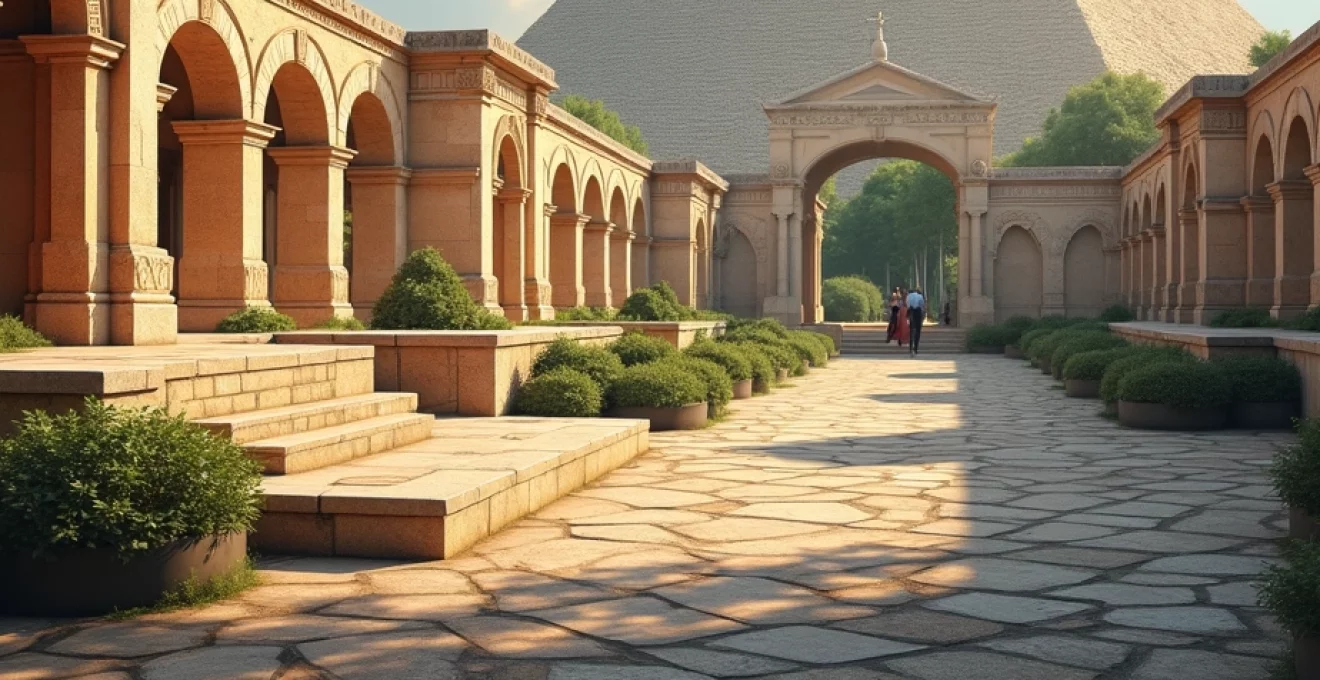
Embarking on a journey through time and culture offers an unparalleled opportunity to connect with our shared human heritage. From ancient wonders to medieval marvels, Renaissance masterpieces to Eastern spiritual sanctuaries, the world is replete with destinations that tell the story of human civilisation. These cultural landmarks not only showcase remarkable architectural and artistic achievements but also provide profound insights into the beliefs, values, and ways of life of diverse societies throughout history.
Ancient civilizations: unveiling the cradles of human history
The study of ancient civilizations reveals the foundations upon which our modern world is built. These early societies developed sophisticated systems of governance, pioneered groundbreaking technologies, and created awe-inspiring monuments that continue to captivate us millennia later. Exploring these sites allows us to trace the roots of human ingenuity and cultural development.
Exploring the pyramids of giza: engineering marvels of ancient egypt
The Pyramids of Giza stand as a testament to the incredible engineering prowess of the ancient Egyptians. Built over 4,500 years ago, these monumental structures continue to astound visitors with their sheer size and precision. The Great Pyramid of Khufu, the largest of the three, was the tallest man-made structure in the world for nearly 4,000 years.
Visitors to the Giza plateau can marvel at the intricate construction techniques employed by ancient builders, who used sophisticated tools and mathematical knowledge to create these perfectly aligned monuments. The nearby Sphinx, with its enigmatic gaze, adds another layer of mystery to this already captivating site.
The precision and scale of the Pyramids of Giza serve as a humbling reminder of the extraordinary capabilities of ancient civilizations, challenging our modern notions of progress and achievement.
Unraveling mysteries at machu picchu: inca architecture and astronomy
Perched high in the Andes Mountains of Peru, Machu Picchu stands as a crowning achievement of Inca civilization. This 15th-century citadel, rediscovered in 1911, continues to awe visitors with its intricate stonework, terraced fields, and harmonious integration with the surrounding landscape.
One of the most fascinating aspects of Machu Picchu is its alignment with astronomical events. The Intihuatana stone, often referred to as the ‘Hitching Post of the Sun’, is believed to have functioned as a solar calendar, demonstrating the Incas’ advanced understanding of celestial movements. Exploring the site reveals the sophisticated urban planning and agricultural techniques employed by the Inca, showcasing their mastery of their environment.
Athens acropolis: birthplace of democracy and classical architecture
The Acropolis of Athens, crowned by the iconic Parthenon, stands as a symbol of classical Greek culture and the birthplace of democracy. This ancient citadel, with its collection of temples and structures, offers a window into the artistic and philosophical achievements of 5th century BCE Athens.
The Parthenon, dedicated to the goddess Athena, is renowned for its perfect proportions and innovative use of optical illusions to create a sense of harmony and balance. Visitors can also explore other significant structures such as the Erechtheion, with its famous Caryatid porch, and the Temple of Athena Nike.
The Acropolis Museum, located at the foot of the hill, houses an impressive collection of artifacts recovered from the site, providing crucial context for understanding the cultural and historical significance of this ancient wonder.
Medieval marvels: castles, cathedrals, and cultural crossroads
The medieval period, often unfairly labeled as the ‘Dark Ages’, was in fact a time of significant cultural and technological advancements. This era saw the construction of magnificent castles and cathedrals, the development of new artistic styles, and the exchange of ideas across diverse cultures. Exploring medieval sites offers insights into the complex social, religious, and political structures of the time.
Carcassonne: fortified city and pinnacle of medieval military architecture
The fortified city of Carcassonne in southern France stands as one of the most complete and well-preserved medieval walled cities in Europe. Its massive walls, towers, and barbicans offer a vivid illustration of medieval military architecture and urban planning.
Wandering through the narrow streets of the old city, visitors can experience the atmosphere of a medieval town, with its winding alleys, half-timbered houses, and gothic churches. The Château Comtal, located within the walls, provides an in-depth look at the defensive systems and daily life in a medieval fortress.
Carcassonne’s strategic location made it a key player in the conflicts between France and Spain, as well as in the Albigensian Crusade, adding layers of historical significance to its architectural splendor.
Notre-dame de paris: gothic masterpiece and french cultural icon
Notre-Dame de Paris, despite recent setbacks, remains one of the finest examples of French Gothic architecture and a symbol of Parisian cultural identity. Construction of the cathedral began in 1163 and continued for nearly two centuries, resulting in a harmonious blend of architectural innovations.
The cathedral’s façade, with its intricate sculptures and iconic rose window, tells biblical stories and depicts scenes from daily medieval life. Inside, the soaring vaulted ceilings and delicate stained glass windows create an atmosphere of awe and reverence.
Notre-Dame is not merely a religious monument, but a testament to the artistic and technical achievements of medieval craftsmen, embodying the spiritual and cultural aspirations of an entire era.
Alhambra of granada: moorish art and islamic influence in spain
The Alhambra, a palace and fortress complex in Granada, Spain, represents the pinnacle of Islamic art in Europe. Built primarily in the 13th and 14th centuries during the Nasrid dynasty, the Alhambra showcases the sophisticated aesthetics and engineering of Moorish culture.
Visitors to the Alhambra are treated to a sensory experience of intricate geometric patterns, calligraphy, and arabesque designs adorning walls and ceilings. The use of water features and gardens throughout the complex demonstrates the Islamic concept of paradise on earth.
The Alhambra also includes elements of Christian architecture, added after the Reconquista, making it a unique example of cultural fusion and historical layering.
Renaissance and baroque: artistic revolutions in european cities
The Renaissance and Baroque periods marked a dramatic shift in European art, architecture, and thought. These eras saw a revival of classical learning, scientific innovation, and new artistic techniques that continue to influence our cultural landscape today. Exploring the cities at the heart of these movements offers an immersive experience in the artistic and intellectual revolutions that shaped the modern world.
Florence’s uffizi gallery: cradle of renaissance art and medici legacy
The Uffizi Gallery in Florence houses one of the world’s most significant collections of Renaissance art, showcasing the works of masters such as Botticelli, Leonardo da Vinci, and Michelangelo. Originally built as offices for Florentine magistrates, the building itself is a masterpiece of Renaissance architecture.
Wandering through the Uffizi’s corridors, visitors can trace the evolution of Italian Renaissance painting, from the early innovations in perspective and naturalism to the High Renaissance’s mastery of form and emotion. Key works such as Botticelli’s ‘Birth of Venus’ and Leonardo’s ‘Annunciation’ offer insights into the philosophical and aesthetic ideals of the period.
The gallery also reflects the influence of the Medici family, whose patronage was instrumental in fostering the artistic and cultural flowering of Renaissance Florence.
Vatican city: michelangelo’s sistine chapel and st. peter’s basilica
Vatican City, the heart of the Roman Catholic Church, houses some of the world’s most renowned artistic treasures. The Sistine Chapel, with Michelangelo’s frescoed ceiling and ‘Last Judgment’, stands as a pinnacle of Renaissance art, demonstrating the artist’s unparalleled skill in depicting the human form and religious narratives.
St. Peter’s Basilica, the largest church in the world, showcases the grandeur of Renaissance and Baroque architecture. Designed by luminaries such as Bramante, Michelangelo, and Bernini, the basilica and its square create a sense of awe and spiritual elevation.
The Vatican Museums offer an encyclopedic collection of art from ancient times to the present, allowing visitors to trace the development of Western art through the centuries.
Amsterdam’s canal ring: 17th century urban planning and dutch golden age
Amsterdam’s Canal Ring, a UNESCO World Heritage site, exemplifies the urban planning and architectural innovations of the Dutch Golden Age. The concentric canal system, developed in the 17th century, showcases the Netherlands’ expertise in water management and created a unique cityscape that continues to charm visitors today.
The canal houses lining the waterways reflect the prosperity of 17th-century Amsterdam, with their ornate gables and large windows. Many of these houses have been converted into museums, offering glimpses into the domestic life and mercantile activities of the Dutch Golden Age.
The Rijksmuseum, located near the Canal Ring, houses masterpieces by Dutch artists such as Rembrandt and Vermeer, providing context for the artistic and cultural achievements of this remarkable period in Dutch history.
Eastern wonders: ancient temples and spiritual sanctuaries
The cultural heritage of Asia offers a rich tapestry of architectural marvels and spiritual traditions. From the sprawling temple complexes of Southeast Asia to the serene gardens of Japan and the opulent palaces of India, these sites provide insights into diverse philosophical and religious worldviews that have shaped Eastern civilizations for millennia.
Angkor wat: khmer empire’s architectural triumph in cambodia
Angkor Wat, the largest religious monument in the world, stands as the crowning achievement of Khmer architecture. Built in the 12th century as a Hindu temple dedicated to Vishnu, it was later converted to a Buddhist sanctuary. The temple’s design is rich in symbolism, with its central towers representing Mount Meru, the home of the gods in Hindu cosmology.
The intricate bas-reliefs adorning the temple walls depict scenes from Hindu epics and historical events, offering a visual narrative of Khmer culture and beliefs. The surrounding Angkor Archaeological Park contains numerous other temples and structures, providing a comprehensive view of the architectural and artistic evolution of the Khmer Empire.
Angkor Wat’s enduring beauty and spiritual significance make it not just a national symbol for Cambodia, but a testament to the artistic and engineering capabilities of ancient Southeast Asian civilizations.
Kyoto’s zen gardens: japanese philosophy in landscape design
The Zen gardens of Kyoto offer a profound expression of Japanese aesthetics and philosophy. These meticulously designed landscapes, with their carefully arranged rocks, raked gravel, and minimalist plantings, are intended to facilitate meditation and contemplation.
One of the most famous examples is the garden at Ryoan-ji Temple, consisting of fifteen rocks set in a sea of white gravel. The garden’s design encourages viewers to find their own meaning and interpretation, reflecting Zen principles of simplicity and mindfulness.
Other notable gardens in Kyoto, such as those at Ginkaku-ji (Silver Pavilion) and Kinkaku-ji (Golden Pavilion), showcase different styles of Japanese garden design, from lush moss gardens to stroll gardens with picturesque ponds and bridges.
Taj mahal: mughal architecture and shah jahan’s eternal love story
The Taj Mahal, located in Agra, India, is universally admired as one of the world’s most beautiful buildings. Commissioned by Mughal Emperor Shah Jahan as a mausoleum for his beloved wife Mumtaz Mahal, the Taj Mahal is a masterpiece of Mughal architecture, combining elements from Persian, Islamic, and Indian architectural styles.
The perfect symmetry of the building, the delicate inlay work of precious and semi-precious stones, and the reflective pools in the surrounding gardens create an atmosphere of ethereal beauty. The changing colors of the marble throughout the day, from a soft pink at dawn to brilliant white at noon and a warm orange at sunset, add to the Taj Mahal’s mystique.
Beyond its architectural splendor, the Taj Mahal stands as a symbol of eternal love, attracting millions of visitors each year to marvel at its beauty and contemplate its romantic legacy.
New world archaeological sites: Pre-Columbian civilizations
The Americas were home to sophisticated civilizations long before European contact. Archaeological sites across North and South America reveal the complex social structures, advanced technologies, and rich cultural traditions of these pre-Columbian societies. Exploring these sites offers a chance to appreciate the diversity and achievements of Native American cultures.
Chichen itza: maya astronomical observatories and ball courts
Chichen Itza, located in Mexico’s Yucatan Peninsula, was one of the largest and most important cities of the Maya civilization. The site’s most famous structure, the pyramid of El Castillo (also known as the Temple of Kukulcan), demonstrates the Maya’s advanced understanding of astronomy and mathematics.
During the spring and autumn equinoxes, the play of light and shadow on the pyramid creates the illusion of a serpent descending the stairs, a spectacle that continues to draw thousands of visitors. The Great Ball Court, the largest in Mesoamerica, offers insights into the ritualistic ball game that played a crucial role in Maya society.
Other notable structures at Chichen Itza include the Observatory (El Caracol), which was used for astronomical observations, and the Sacred Cenote, a natural sinkhole that played a significant role in Maya religious rituals.
Teotihuacan: mexico’s ancient metropolis and pyramid of the sun
Teotihuacan, located near Mexico City, was one of the largest urban centers in the pre-Columbian Americas. The city’s precise origins remain a mystery, but its influence spread across Mesoamerica, shaping the cultural and artistic traditions of later civilizations, including the Aztecs.
The site is dominated by the massive Pyramid of the Sun, the third-largest pyramid in the world. Climbing to its summit offers panoramic views of the ancient city layout, including the famous Avenue of the Dead. The smaller Pyramid of the Moon and the Temple of Quetzalcoatl (also known as the Temple of the Feathered Serpent) showcase the sophisticated architectural and artistic achievements of Teotihuacan’s builders.
Recent archaeological discoveries continue to shed light on the city’s history, including evidence of human sacrifices and complex burial practices, revealing the intricate social and religious structures of this ancient metropolis.
Mesa verde: ancestral puebloan cliff dwellings in colorado
Mesa Verde National Park in Colorado preserves some of the best-preserved Ancestral Puebloan archaeological sites in the United States. The park’s most famous features are the cliff dwellings, elaborate stone complexes built into the sheltered alcoves of canyon walls.
Cliff Palace, the largest cliff dwelling in North America, contains 150 rooms and 23 kivas (ceremonial chambers), providing a vivid illustration of Ancestral Puebloan architecture and community planning. Other notable sites within the park include Balcony House and Long House, each offering unique insights into the daily life and cultural practices of these ancient people.
The park also includes numerous mesa-top sites, petroglyphs, and artifacts that span over 700 years of Ancestral Puebloan history. Exploring Mesa Verde allows visitors to appreciate the ingenuity and resilience of these early American cultures, who thrived in a challenging desert environment for centuries.
The cultural destinations highlighted in this exploration offer more than just a glimpse into the past; they provide a profound connection to the shared human experience across time and space. From the engineering marvels of ancient Egypt to the spiritual sanctuaries of Japan, each site tells a unique story of human creativity, belief, and perseverance. By immersing ourselves in these historical and cultural wonders, we gain a deeper understanding of our collective heritage and the diverse paths that have led to our modern worl
d. As we journey through these cultural landmarks, we not only witness the tangible remnants of past civilizations but also engage with the intangible heritage that continues to shape our world today. These destinations serve as bridges between the past and present, inviting us to reflect on our shared human experience and the enduring power of cultural expression.
By immersing ourselves in these historical and cultural wonders, we gain a deeper appreciation for the diversity of human achievement and the interconnectedness of global cultures. Whether marveling at the precision of ancient engineering, contemplating the spiritual depth of sacred spaces, or admiring the beauty of artistic masterpieces, each experience enriches our understanding of the world and our place within it.
As we continue to explore and preserve these cultural treasures, we ensure that future generations can also benefit from the wisdom, creativity, and inspirational power of our shared global heritage. In doing so, we contribute to a more informed, empathetic, and culturally aware society, better equipped to face the challenges and opportunities of our increasingly interconnected world.